The Ethical Implications of Free Software in Business
In today’s digital age, the landscape of software development has transformed dramatically with the rise of free software (often referred to as open-source software). This paradigm shift not only alters the way software is created, distributed, and maintained but also presents a myriad of ethical implications—especially in the business realm. As more companies adopt and develop free software, understanding these ethical dimensions is crucial.
What Is Free Software?
Free software is not about zero-cost; rather, it revolves around the freedom it grants users. According to the Free Software Foundation, free software provides users the freedom to run, modify, and distribute the software. This approach contrasts sharply with proprietary software, where the source code is locked away and users have little to no control over the software’s functionality or data handling.
The Ethical Playground
So why should businesses care about using free software? It’s not just a cost-cutting strategy; it opens up a landscape rich in ethical considerations.
Enhancing Collaboration
One of the most profound ethical implications of free software is the encouragement of collaboration. Businesses can benefit from a vibrant ecosystem where developers from all backgrounds can contribute. This leads to better, more diverse software solutions while also giving companies access to the collective intelligence and creativity of the global developer community.
In practice, this means that businesses leveraging free software can tap into innovative ideas and improvements that may never come from a traditional corporate structure. The spirit of collaboration can foster a sense of ownership not only among developers but also among users, promoting an atmosphere of shared responsibility and accountability.
Transparency and Trust
Ethics in software isn’t only about collaboration but also transparency. Free software is built on open-source principles, allowing anyone to inspect the code for vulnerabilities or unethical practices. This level of transparency builds trust with customers and partners alike. When businesses use open-source systems, they can alleviate concerns about hidden backdoors, surveillance, or data breaches.
Imagine a company priding itself on customer privacy utilizing proprietary software that they can’t verify. If a security flaw leads to a data leak, consumers may rightfully question the company’s ethical standards. In contrast, organizations using free software can demonstrate their commitment to ethical practices by allowing public scrutiny of their systems.
Fair Competition
Free software can also level the playing field in business. Smaller companies or startups, often at a disadvantage due to limited resources, can harness free software to compete with larger enterprises. This fosters innovation and allows new players to enter the market without hefty licensing fees. In this sense, free software contributes to a more equitable competitive landscape.
However, the challenge arises when larger corporations adopt free software as a way to dominate their industries, turning it into a tool for monopolistic practices. They may leverage free software to out-compete smaller players while still profiting disproportionately from contributions made by the community. Herein lies the ethical dilemma—while free software can empower innovation, it can also perpetuate existing power dynamics.
Changing Business Norms
The pervasive use of free software is also reshaping traditional business norms. Companies that contribute back to the free software community tend to garner goodwill and loyalty, enhancing their brand reputation. This flips the script on an often transactional relationship many have come to expect in business. Furthermore, the expectation that businesses should give back to the community aligns with a growing trend of corporate social responsibility. More consumers are seeking out brands that demonstrate ethical practices, and contributing to open-source projects is one powerful strategy for businesses aiming to enhance their reputations.
Access and Inequality
On the flip side, while free software promotes access, it does not eliminate inequality. Individuals or organizations still need the skills to work with this software. The skills gap can pose barriers for those who might not have access to the necessary training or technology. Thus, while free software exists, it’s important to ensure that access to the education and resources to utilize it effectively is also made available to marginalized groups.
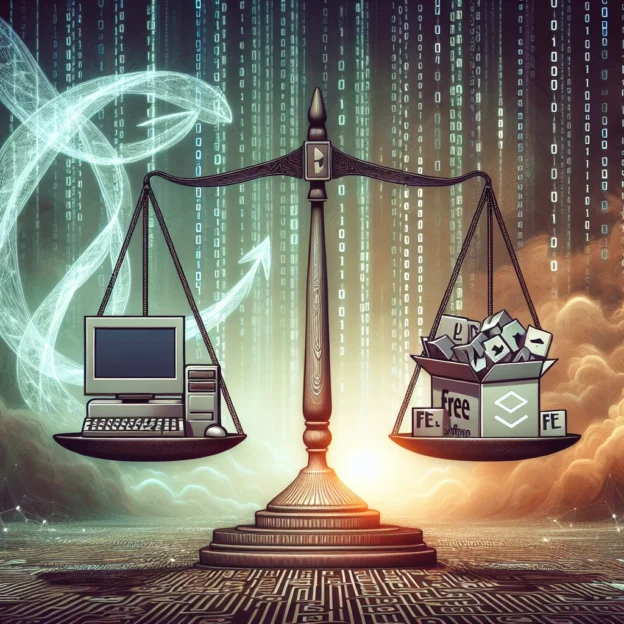
When we consider the broader picture, the ethical implications of free software in business highlight a delicate balance—a balancing act between innovation and collaboration, transparency and trust, competition and inequality. Businesses must navigate these waters with care and integrity, recognizing that their choices have ramifications beyond the bottom line.
Embarking on the journey of free software means engaging not just with technology but also with a framework of values that promote fairness, responsibility, and social good. As businesses continue to leverage the power of free software, it’s vital for them to remain conscious of their impact and guide their actions by the principles that steward the right balance between ethical imperatives and business interests, ensuring a future where both can thrive together.