Understanding Open Source Licenses: A Guide for Entrepreneurs
Open source software can help a young business move faster, keep costs down, and build on tools that have already been tested by a large community. But “open source” doesn’t mean “no rules.” Every open source project comes with a license, and that license sets conditions for how you can use, modify, and share the software.
For entrepreneurs, understanding those conditions early can prevent frustrating surprises later—especially when a product is growing, attracting customers, or preparing for investment.
What an open source license actually does
A software license is a set of permissions and obligations. It tells you what you’re allowed to do with the code and what you must do in return. Depending on the license, you may need to include copyright notices, provide a copy of the license, or share changes when you distribute the software.
The details matter because “using” software can mean different things. You might run it internally, include it in a downloadable app, or offer it as part of a hosted service. A license may treat these situations differently.
Two broad license families
Open source licenses are often grouped into permissive and copyleft licenses.
Permissive licenses generally give businesses broad flexibility. The MIT and Apache 2.0 licenses are common examples. They typically allow you to use, modify, and distribute the software—including in commercial products—while requiring you to preserve certain notices. Apache 2.0 also includes express patent-related provisions, which may be relevant for technology companies.
Copyleft licenses aim to keep derivative software available under similar terms. The GNU General Public License (GPL), for example, can require that distributed derivative works be licensed under the GPL and that recipients have access to the corresponding source code. The GNU Affero General Public License (AGPL) includes conditions that can apply when users interact with modified software over a network.
That doesn’t make copyleft licenses “bad” for business. They can be a good fit when a company wants improvements to remain open. The key is knowing what obligations might apply to your product and how the software is being used.
Common misconceptions to avoid
One frequent mistake is assuming that software is free of obligations because it costs nothing. Price and licensing are separate: free-to-download code can still have conditions.
Another is assuming that changing a few lines eliminates license requirements. Whether your work counts as a derivative work can depend on the facts and applicable law; a small edit doesn’t automatically settle the question.
It’s also risky to treat all open source licenses as interchangeable. A project may include code under several licenses, and dependencies can bring their own terms. Even a tool used only in your development process may come with different considerations from a library included in the product you distribute.
Build a simple license review into your workflow
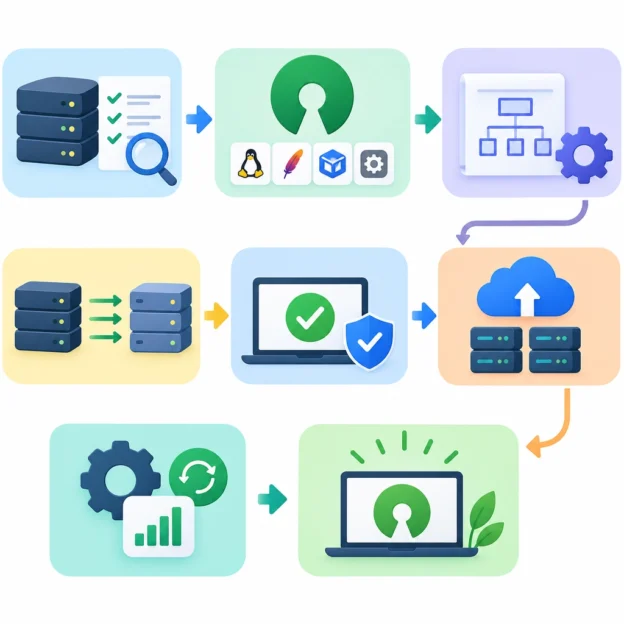
You don’t need a large legal department to start managing open source thoughtfully. A few practical habits can make a difference:
- Track your dependencies. Keep an up-to-date list of the open source packages your product uses, including versions and license information.
- Review before adoption. Check the project’s license before adding a new library, particularly if it will be distributed with your product or used in a hosted service.
- Keep required notices. Store license texts and copyright notices where your team can find them, and include them in distributions when required.
- Set a policy for uncertain cases. Decide who evaluates unfamiliar or potentially restrictive licenses. Avoid leaving the question to a rushed engineer just before launch.
- Recheck as your business changes. A component used internally today may become part of a customer-facing product tomorrow. Acquisitions, new distribution models, and product changes can also shift the picture.
Automated software-composition analysis tools can help identify dependencies and flag license information, but they’re not a substitute for reviewing the terms. They can miss context, unusual exceptions, or licensing information that’s incomplete.
Make licensing part of product planning
Open source is not just a legal concern; it can affect product architecture and business strategy. A team may choose a permissively licensed library for a proprietary product, contribute fixes back to a community project, or avoid a component whose obligations don’t fit the company’s plans.
When the stakes are significant—such as preparing for investment, acquiring a company, or launching a product built around copyleft software—consult a lawyer familiar with software licensing. A short conversation early on is often easier than sorting out a licensing issue under pressure.
Open source works best when entrepreneurs treat it as both a resource and a relationship. Understanding the license helps you use the software confidently, respect the people who created it, and build a business that can grow without unexpected hurdles.