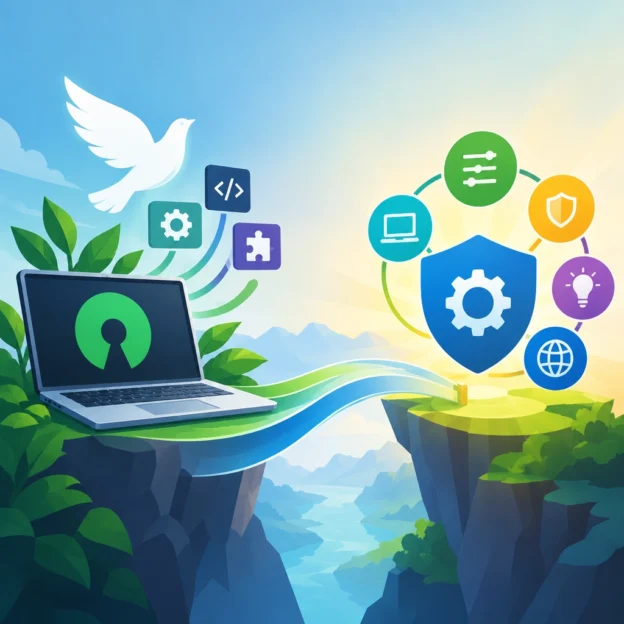
The Connection Between Software Freedom and User Empowerment
Most of us use software every day without thinking much about who controls it. We open an app, store our photos in the cloud, edit a document, or ask a device to do something for us. The tools may feel personal, but the rules behind them—what we’re allowed to change, where our information goes, and how long we can keep using them—are usually set by someone else.
That’s where software freedom comes in. It’s not just an abstract principle for programmers. It’s closely tied to a practical question: How much control do people have over the technology they rely on?
What does software freedom mean?
Software is often described as “free” when users have the freedom to run it, study how it works, modify it, and share it with others. This is different from simply being free of charge. A free download can still restrict what you do with the program, while software that costs money can still give users meaningful freedoms.
These rights matter because software influences everyday choices. It can determine whether you can open a file years from now, move your data to a different service, fix a security problem, or adapt a tool to fit your needs. When only the vendor can make those decisions, users have limited room to act.
Freedom turns users into participants
Consider a note-taking app. If it stores your notes in a closed format and offers no easy way to export them, you may feel stuck even if a better option appears. If the software uses open formats and lets you move your data, switching becomes a real choice.
That ability to choose is a basic form of empowerment. It reduces dependence on a single company and gives people more say over how their digital lives are organized. Users can select tools that match their priorities, whether that means privacy, accessibility, cost, or a specific feature.
The same idea applies to customization. A school may need software that works well with assistive technologies. A small business may want to add a feature that fits its workflow. A community organization may need a version that runs on older computers. When software can be studied and modified, people are not limited to the assumptions made by its original designers.
Transparency makes trust more meaningful
Software often handles sensitive things: messages, financial records, health information, and personal photos. Yet users may have little visibility into what a program does behind the scenes.
Freedom to inspect software can help independent experts find flaws and explain how a tool behaves. It doesn’t guarantee that every program is safe or that every user will read its code. But it makes review possible, rather than requiring everyone to take a company’s word for it.
This matters especially when software is used in public services, education, and civic life. If a tool affects people’s access to essential services, the ability to examine and question it can support accountability. Technology becomes easier to trust when it can be checked.
Shared software can strengthen communities
Software freedom also changes who gets to contribute. In a closed system, improvements typically depend on the company that owns the product. In an open project, users, developers, researchers, and organizations can work together to fix problems or build new features.
That collaboration can spread the benefits beyond the original creators. A fix made by one person may help thousands of others. A tool developed for one community might be adapted by another. And because people can share improvements, useful ideas don’t have to remain locked inside a single organization.
This doesn’t mean every project is welcoming, well-maintained, or easy to use. Communities still need funding, good leadership, and thoughtful design. But freedom creates the possibility for broader participation—and participation is a powerful form of agency.
A more empowered digital life
Software freedom is not about rejecting every commercial product or expecting everyone to become a programmer. Most people simply want tools that work. The key is whether they can make meaningful choices when those tools stop working for them, no longer meet their needs, or handle their information in ways they don’t accept.
A free digital tool can give people room to understand, adapt, and move on. It can make technology feel less like something imposed and more like something people can shape together. In a world where so much of daily life depends on software, that room to choose is more than a technical detail—it’s part of what it means to have control over your own life.