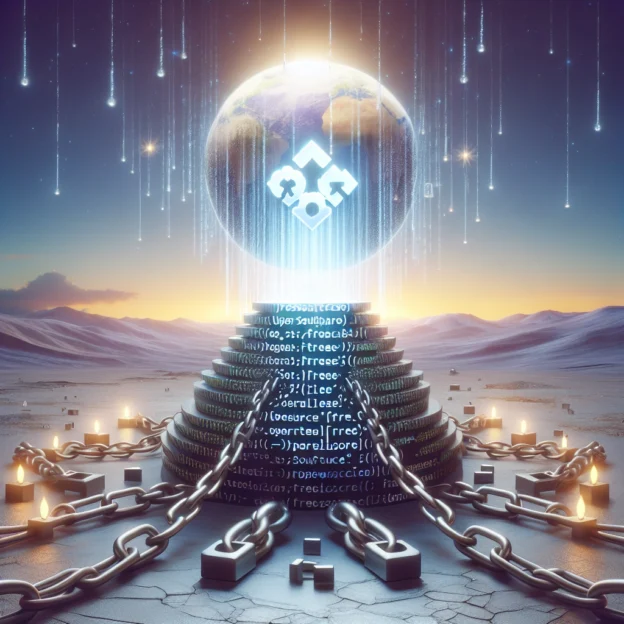
Free Software and User Empowerment: A Case for Software Freedom
In our fast-paced digital landscape, software is everywhere – in our phones, cars, home appliances, and even our refrigerators. As we increasingly rely on these tools, a critical question arises: Who truly controls the software we use? This question leads us down a path of exploration regarding free software, a culture and philosophy that champions user empowerment, transparency, and freedom over digital landscapes.
At its core, free software isn’t just about the price tag (though it’s notably free of cost); it’s about the fundamental rights that come with using a piece of software. Richard Stallman, the pioneer of free software, articulated it best: “Free software is a matter of liberty, not price.” The essence of free software is not merely the absence of cost, but rather the freedom to use, modify, and share software as we see fit.
What Does Free Software Look Like?
When we talk about free software, we refer to software allowing users to run, study, modify, and distribute it. This is more formally represented by the four essential freedoms:
- The freedom to run the program, for any purpose.
- The freedom to study and change the program. Access to the source code is a precondition for this.
- The freedom to redistribute copies so you can help others.
- The freedom to distribute modified versions of the program. Access to the source code is a precondition for this.
This ideology fosters a community-driven approach to software development. The open-source nature of free software often leads to innovation, collaboration, and the rapid resolution of bugs – benefits that proprietary software typically struggles to match.
User Empowerment Through Knowledge
One of the most compelling aspects of free software is how it empowers users. When you have the source code, you’re not merely a passive consumer but an informed participant in the digital realm. You can make adjustments that meet your specific needs, ensuring that the software truly serves you.
Imagine using a product that you can tailor according to your workflow or priorities. If a feature isn’t working as intended, you can fix it or reach out to a community that shares your passion for that particular piece of software. This kind of engagement fosters a sense of agency and reduces user dependency on a singular company or platform.
Moreover, free software encourages learning and curiosity. For tech enthusiasts or those wanting to pursue careers in programming, diving into the source code of well-documented software can be a fantastic educational tool. It removes barriers and allows anyone to become a developer in their own right, promoting a culture of knowledge-sharing rather than a rigid perception of technology as solely the realm of ‘experts.’
Privacy and Security
In today’s digital age, privacy concerns are at an all-time high. With data breaches and corporate surveillance becoming daily headlines, the reliability of the tools we use is under scrutiny. With free software, you can see exactly what the software is doing. You’re not left wondering if a third-party company is collecting your data or using it to target you with ads.
Transparency is a significant selling point of free software. Users can audit the code, ensuring that no malicious elements have been hidden. And if vulnerabilities are found, a community of developers is typically quick to patch them.
The Bigger Picture
While free software provides incredible personal benefits, its implications extend beyond individual users to society as a whole. By championing open-access tools, we pave the way for innovation and creativity that can flourish in a less restricted environment.
Moreover, free software plays a significant role in reducing digital inequalities. When expensive proprietary tools dominate the market, those without the means to pay face significant barriers in accessing quality technology. Free software levels the playing field, making powerful tools accessible to anyone, regardless of their financial situation.
Embracing Software Freedom
The case for free software isn’t just about saving some cash; it’s about reclaiming our rights as users. When we choose software freedom, we assert our values against a backdrop of corporate dominance and control. We empower ourselves, embrace learning, and cultivate communities that prioritize growth, security, and transparency.
In a world where digital interaction is increasingly central to our lives, embracing free software is an act of empowerment that can lead to a more equitable, innovative, and transparent future. You can be more than just a consumer – you can be a contributor, an innovator, and a guardian of your own digital existence.
So whether you’re a tech enthusiast, a casual user, or just someone who’s had enough of complicated software licenses, consider dipping your toes into the world of free software. There’s a vibrant community waiting for you, and who knows—you might just find the perfect tool that fits your needs while aligning with your values.