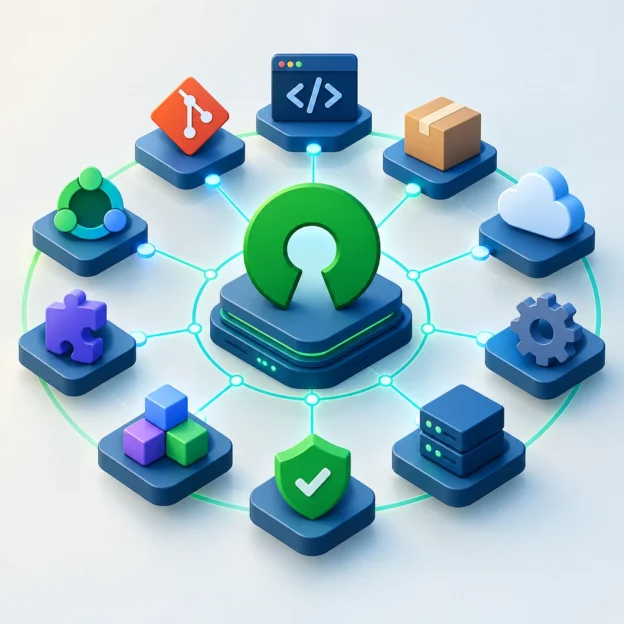
Building a Robust Open Source Software Ecosystem
Open source software powers much of the digital world, from the tools developers use every day to the infrastructure behind major online services. But a healthy ecosystem doesn’t appear simply because code is available on the internet. It depends on people, institutions, and practices that help projects remain useful, secure, and welcoming over time.
Building that ecosystem is a shared effort. Maintainers write and review code, users report problems, companies provide funding and expertise, and communities help newcomers find their place. When these contributions work together, open source can become more than a collection of repositories—it can become a durable foundation for innovation.
Make projects easier to join
A project’s first interaction with a potential contributor often happens before they write a single line of code. They may read the README, look for installation instructions, or try to understand how to report a bug. If those steps are confusing, even an enthusiastic newcomer may move on.
Clear documentation lowers the barrier to participation. A good project explains what it does, how to get started, where to ask questions, and what kinds of contributions are welcome. Contribution guides, issue templates, and a small list of beginner-friendly tasks can turn uncertainty into a practical next step.
Just as importantly, projects need to treat people well. Respectful communication and predictable review practices make it easier for contributors to stay involved. Communities don’t need to be perfect, but they should have clear expectations for conduct and a fair way to address problems.
Support maintainers, not just code
Many open source projects rely on a small number of maintainers who handle everything from reviewing pull requests to answering user questions. That work can become overwhelming, especially when a project is widely used but receives little direct support.
A stronger ecosystem recognizes maintenance as ongoing work. Organizations that depend on open source can contribute by sponsoring maintainers, funding foundations, paying employees to work on shared projects, or helping with tasks such as testing, documentation, and security reviews. These contributions don’t all need to be large. Consistent support can be more valuable than a one-time donation.
Companies can also make their involvement more sustainable by avoiding a “use it for free and ask for favors” approach. If a project is important to a business, that business should consider contributing resources in proportion to its reliance on the project.
Treat security as a shared responsibility
Open source transparency makes it possible for many people to inspect code, but visibility alone doesn’t guarantee security. Vulnerabilities still need to be found, reported responsibly, fixed, and communicated to users. Dependencies must be tracked, and releases need reliable processes.
Project teams can strengthen security by adopting practices that fit their size and risk level: automated testing, dependency checks, clear vulnerability-reporting instructions, and signed or otherwise verifiable releases. Larger projects may benefit from independent audits and dedicated security teams.
The wider community has a role here, too. Organizations should keep track of the open source components they use and be prepared to help maintain them. Security is not a task that can be handed off entirely to volunteers after a flaw is discovered.
Build for continuity
A project’s long-term health depends on more than its current roadmap. What happens if its main maintainer steps away? Can someone else make a release, review changes, or access essential project accounts?
Shared ownership, documented release procedures, and more than one trusted maintainer help reduce these risks. So does making project decisions in public, where future contributors can understand why choices were made. These habits may seem modest, but they can make the difference between a project that survives a leadership change and one that quietly stalls.
Interoperability matters as well. Projects that follow common standards and work well with other tools give users more flexibility and reduce dependence on any single vendor or community.
Measure success by community health
Downloads and stars can show that a project is popular, but they don’t reveal whether it is sustainable. A more useful picture includes the number of active maintainers, how quickly contributions receive attention, whether security issues are handled responsibly, and whether newcomers can participate.
The goal isn’t to turn every project into a large organization. Some tools are intentionally small, and that can be healthy. The point is to match expectations and support to the project’s real role. A widely relied-on component may need more formal governance and funding than a personal utility.
A robust open source ecosystem is built one practical choice at a time: clear documentation, fair collaboration, reliable funding, careful security work, and plans for continuity. When users and organizations contribute as thoughtfully as maintainers do, open source becomes more resilient—and everyone who depends on it benefits.