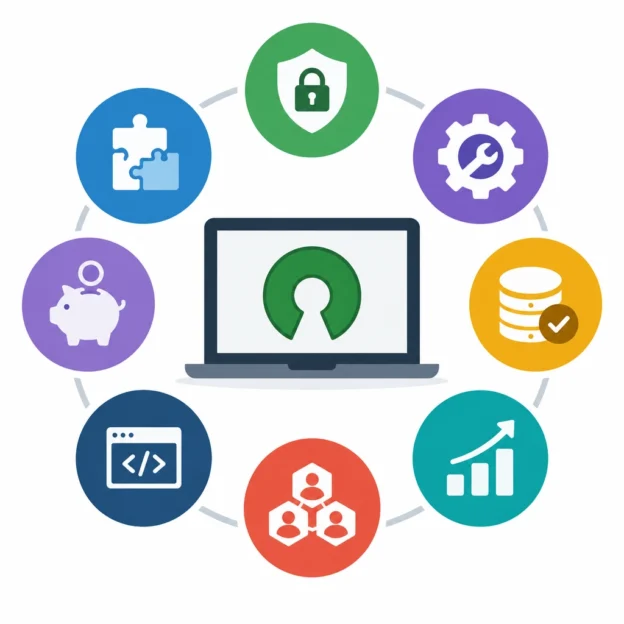
What to Look for in Open Source Business Software
Open source business software can be a smart alternative to pricey subscriptions. It may offer more control, flexible customization, and a community that helps improve the product. But “open source” doesn’t automatically mean “right for your business”—or even “free to run.” Before you commit, look beyond the license and consider how the software will fit into your day-to-day work.
A good fit for the work you actually do
Start with your needs, not a feature list. Make a short list of the tasks the software must handle, the people who will use it, and any systems it needs to connect with. A small company looking for invoicing tools, for example, may need different things from a growing team choosing a customer relationship management platform.
Check how the software handles your common workflows. Can staff complete routine tasks without awkward workarounds? Does it support the reports, approvals, and permissions you rely on? A tool with dozens of features may still be a poor fit if it makes everyday work harder.
Active development and a healthy community
With open source software, the project’s ongoing support matters. Look for recent releases, clear documentation, and signs that bugs and security issues are being addressed. An active community forum, issue tracker, or user group can help you see whether people are getting answers—and whether the software is still being maintained.
A large community isn’t the only sign of a good project, but silence can be a warning. If updates have stalled or important questions go unanswered, consider how you’ll manage the software if something breaks or your needs change.
Security and data protection
Business software may hold sensitive information about customers, employees, finances, or operations. Review how it handles access controls, encryption, backups, and security updates. Find out who is responsible for applying updates and responding to vulnerabilities—especially if the software will be hosted on your own servers.
Also consider where your data is stored and who can access it. If you operate in a regulated industry or serve customers in different regions, check whether the software and your hosting setup can support your privacy and compliance obligations. Don’t assume that using open source software automatically makes a system more secure; security depends on how it’s built, configured, and maintained.
Integration and the freedom to move
Most businesses use several tools, so check how easily the software can exchange information with your existing systems. Look for documented APIs, supported integrations, and export options in common formats. Try a small integration or test export before you make the platform central to your operations.
It’s also worth asking how easy it would be to leave. Can you retrieve your data without paying a large fee or hiring a specialist? Does the software use standard formats, or does it store information in a way that makes migration difficult? Open source can offer flexibility, but a complicated setup can still make switching painful.
The real cost of “free”
The license fee may be zero, but the total cost of ownership usually isn’t. Add up hosting, setup, customization, training, maintenance, support, and the time your team will spend managing the system. If you need help, check whether paid support or certified service providers are available.
A hosted version may cost more than installing the software yourself, but it can reduce the burden of updates and infrastructure. On the other hand, self-hosting may make sense if you have the technical staff and specific control requirements. Compare the full costs over several years rather than focusing on the initial price.
Usability and room to grow
A system only helps if people can use it. Ask staff to test realistic tasks—not just browse a demo—and pay attention to whether the interface feels clear and accessible. Training and onboarding take time, so include them in your decision.
Finally, consider whether the software can grow with your business. Look at user limits, performance, customization options, and the availability of outside support. Avoid choosing a platform based only on what you need this month, but don’t pay for complexity you’re unlikely to use.
The best open source business software isn’t simply the most customizable or the most popular. It’s the tool your team can use confidently, maintain responsibly, and adapt as the business changes. A careful trial, a clear cost estimate, and a plan for support can turn an appealing option into a dependable part of your business.