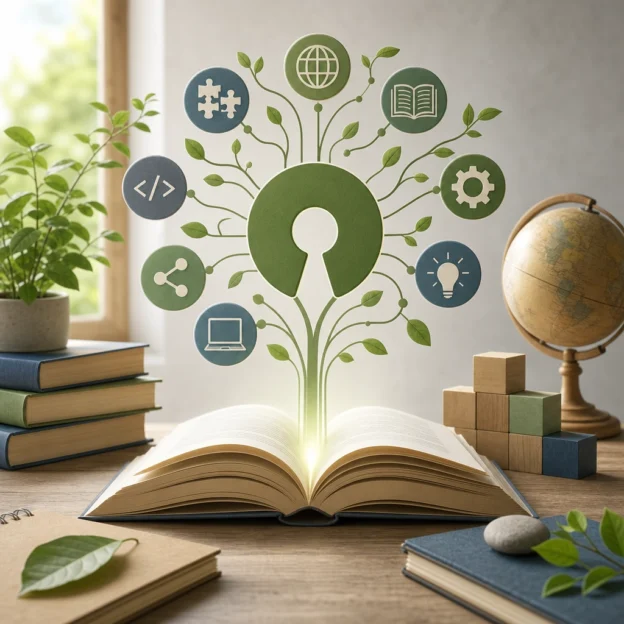
The Case for Open Source in Education and Learning
In today’s fast-paced digital world, we find technology playing an increasingly vital role in how we educate ourselves and others. One of the most exciting trends emerging in this arena is the open-source movement, which is championing the idea that knowledge should be freely accessible to all. From textbooks to software, the open-source philosophy is ushering in a new era in education, and it’s time to explore why this approach deserves a spotlight in our classrooms, online courses, and self-learning journeys.
Accessibility: Breaking Down Barriers
One of the most compelling arguments for open-source education is accessibility. Traditional educational resources—be they textbooks or proprietary software—often come with steep price tags that can limit who can learn what. Open-source resources, on the other hand, are free to use, modify, and distribute. Imagine a high school student wanting to dive into programming but struggling to afford the latest coding textbooks or software licenses. Open-source resources can bridge that gap dramatically, allowing individuals from diverse backgrounds to access the same high-quality educational materials as those in well-funded districts.
This democratization of knowledge empowers students to take control of their learning by providing resources that are not governed by financial constraints. Think about it—if a brilliant young mind in a remote village can access the same learning tools as a tech-savvy student in a metropolitan area, the potential for innovation rises exponentially.
Collaborative Learning: Building Community
Another significant advantage of open-source educational resources is the emphasis on collaboration. When we look at platforms like GitHub, where open-source projects thrive, what we usually find is a vibrant community committed to sharing knowledge and expertise. By using open-source materials in education, students and educators alike can contribute to the curriculum, adapting lessons and tools to better suit their unique contexts.
This collaborative environment nurtures a sense of community, where learners can connect with one another across the globe. Instead of viewing education as a solitary endeavor, students can work together on projects, ask questions, and share insights. Imagine a classroom where students from different countries join forces to tackle a real-world problem; cultural exchanges and diverse perspectives only enrich the learning experience.
Customization: Tailoring the Learning Experience
Every learner is unique, possessing different strengths, weaknesses, and interests. One-size-fits-all educational resources often miss the mark by failing to accommodate this diversity. Open-source materials allow for personalization and adaptation, enabling educators to modify resources according to the specific needs of their students.
For instance, an open-source math software program can be tweaked to emphasize certain areas of mathematics that a classroom might be struggling with or easily replaced with more engaging materials for advanced learners. This aspect of customization fosters a more engaging educational environment, as students can interact with material that speaks to their learning style and abilities.
Lifelong Learning: The Power of Community Engagement
In addition to enhancing traditional education, open-source culture promotes the idea of lifelong learning, which is crucial in our rapidly changing world. As technologies and industries evolve, the willingness to continually learn and adapt becomes priceless. Open-source platforms foster this mindset by providing ongoing resources and community support, making it easier to upskill or pivot into new fields.
For example, a healthcare professional might find themselves needing to understand new software tools that are standard in telemedicine. Through open-source communities, they can access tutorials shared by other users, attend workshops hosted by enthusiasts, and even contribute back to the community as they learn. This cycle of sharing and collaboration means that no one has to be left behind, regardless of where they are on their educational journey.
A Shift Toward Innovation
As we move deeper into the 21st century, education is ripe for innovation. Embracing open-source methods might just be the key to unlocking new potentials and creating a more inclusive and efficient educational landscape. Imagine a world where educational institutions collaborate harmoniously, educators share resources effortlessly, and students engage with learning materials that suit their very needs.
As we continue to advocate for open-source in education, let’s support initiatives that prioritize accessibility, encourage collaboration, and foster customization. By championing open-source resources, we can help cultivate a future where everyone has the chance to learn, grow, and succeed—no matter their circumstances. After all, knowledge should not just be owned, but shared, modified, and expanded for the benefit of all.