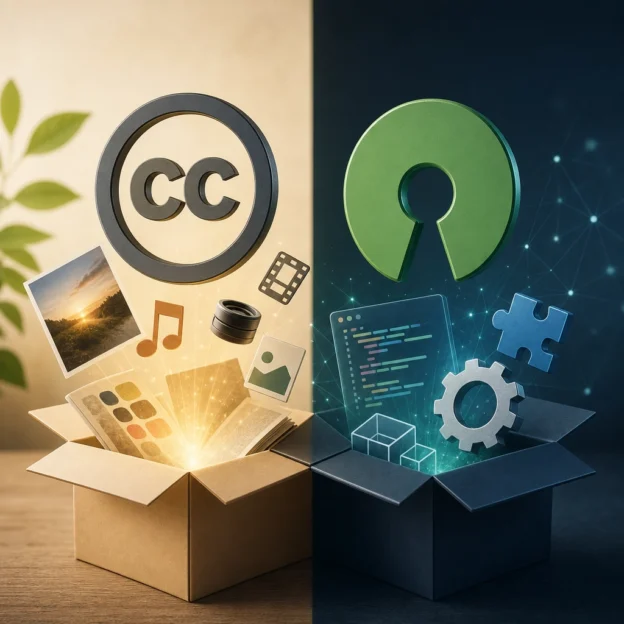
Creative Commons and Open Source: What You Should Know
In today’s digital world, sharing ideas, art, and software has never been easier—or more important. As creators, contributors, and consumers, understanding how to navigate the waters of copyright and licensing can feel like a daunting task. That’s where Creative Commons and open-source licenses come into play. These are two powerful tools designed to foster a culture of sharing while respecting the rights of creators. Let’s dive into these concepts and explore what they mean for you.
What Are Creative Commons?
Founded in 2001, Creative Commons (often abbreviated as CC) is a nonprofit organization that helps creators share their work with the world while retaining certain rights. It provides a suite of free, easy-to-use licenses that allow creators to express how they want their work to be used. Think of it as a way to give permission in advance.
Creative Commons licenses allow people to use works legally without having to ask permission each time. They come in several flavors:
- CC BY: Lets others distribute, remix, adapt, and build upon the original work, even commercially, as long as they credit the creator.
- CC BY-SA: Similar to CC BY but requires derivative works to be licensed under the same terms.
- CC BY-ND: Allows others to use the work commercially but prohibits modifications, ensuring the original work remains unchanged.
- CC BY-NC: Lets others remix, tweak, and build upon the work non-commercially, while giving credit to the creator.
- CC BY-NC-SA: Similar to BY-NC but requires derivative works to be licensed under the same terms.
- CC BY-NC-ND: The most restrictive license, allowing others to download and share the work as long as they credit the creator, but no modifications or commercial use.
This system encourages collaboration, giving creators the flexibility to choose how their work is used while encouraging the public to share and innovate.
The World of Open Source
On the other side, we have open-source software. The open-source movement began in the late 1970s and gained significant momentum in the late 1990s, advocating for the idea that software should be free to use, modify, and distribute. Open-source software typically comes with a license that specifies how it can be used. Popular open-source licenses include the GNU General Public License (GPL), the MIT License, and the Apache License.
The beauty of open-source software lies in its collaborative nature. When someone discovers a bug or wants to enhance a feature, they can dig into the code and make those changes. This openness improves software quality, fosters innovations, and builds strong communities around projects.
The Overlap and Differences
At first glance, Creative Commons licenses and open-source licenses might seem similar—they both promote sharing and collaboration. However, they are used in different realms: Creative Commons is usually applied to creative works like texts, videos, and artworks, while open-source licenses are specific to software development.
What’s more, while Creative Commons offers varying degrees of permissions, open-source licenses, especially the more popular ones, typically allow users to modify and redistribute software freely, provided compliance with the license terms—which can be more technical than artistic.
Why It Matters
Understanding these licenses isn’t just for creators; it’s essential for consumers too. Imagine stumbling upon an inspiring image only to find out later that you’re not supposed to use it without permission. Or using open-source software without understanding its license could lead to potential legal issues, especially if you’re in a business setting.
By embracing Creative Commons and open source, we contribute to a richer cultural landscape where ideas flow freely, and innovation thrives. Whether you’re an artist looking to share your work, a software developer creating the next big app, or simply a curious learner exploring digital content, knowing your way around these licenses can help you navigate the creative commons landscape with confidence.
Final Thoughts
In a world teeming with content—some free, some protected—it’s crucial to understand how to share and use works ethically and legally. Creative Commons and open-source licenses provide a framework that respects the rights of creators while encouraging sharing and collaboration. By becoming a more informed participant in this ecosystem, you’ll not only enhance your own creations but also contribute positively to the digital culture we all share. So, the next time you come across an artistic work or a software project, remember: understanding these licenses isn’t just a technicality; it’s a pathway to wider creativity and community engagement!