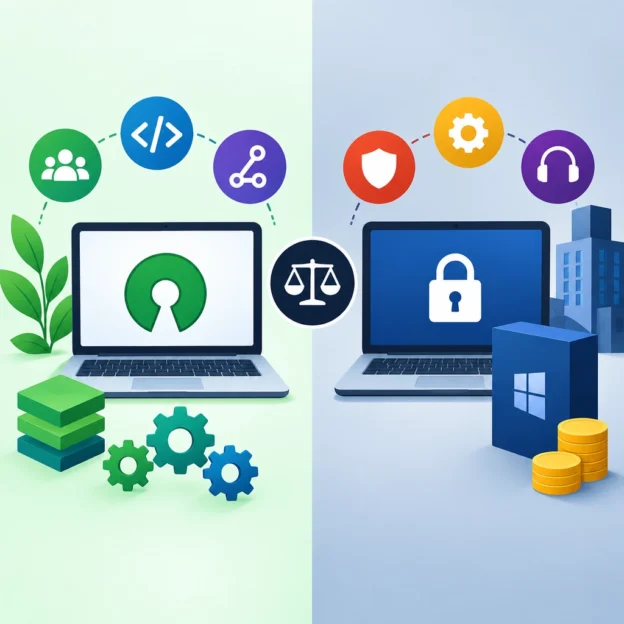
Open Source vs Proprietary Software: Which is Best for You?

Open Source vs. Proprietary Software: Which Is Best for You?

Choosing software often comes down to more than features. You might also care about cost, privacy, support, and how much control you have over the tools you use. That’s where the difference between open source and proprietary software comes in.

Neither type is automatically better. The right choice depends on what you need—and how much time, flexibility, and technical know-how you can bring to the table.

What is open source software?

Open source software makes its source code available for people to view, use, and often modify or share. Popular examples include Linux, Firefox, LibreOffice, and WordPress.

That openness can bring real advantages. A community of developers may inspect the code, fix bugs, add features, and tailor the software to different needs. Businesses can adapt an open source program rather than waiting for a vendor to make changes.

“Open source” doesn’t necessarily mean free of charge, though. The software may cost nothing to download, but setup, hosting, training, customization, and ongoing maintenance can all require time or money.

What is proprietary software?

Proprietary software is owned and controlled by a company or individual. Users typically access it through a license or subscription, and the underlying code isn’t generally available for modification. Microsoft Office, Adobe Photoshop, and many cloud-based business tools are familiar examples.

The main appeal is convenience. Proprietary products often come with polished interfaces, predictable updates, documentation, and a dedicated support team. They’re designed to work out of the box, which can be helpful if you don’t have technical staff on hand.

The trade-off is less control. You’re relying on the vendor for updates, pricing, compatibility, and continued availability. You may also find it difficult to move your data or workflows elsewhere if you decide to switch.

How the two compare

Cost

Open source tools often have no purchase fee, which makes them attractive to individuals, schools, nonprofits, and startups. But the total cost of ownership matters more than the download price. A free tool that takes weeks to configure may cost more in staff time than a paid alternative.

Proprietary software usually has clearer upfront pricing, though subscriptions and add-ons can add up over time. In return, the price may include support, hosting, security updates, or other services.

Flexibility and control

If you want to customize software or understand exactly how it works, open source can offer more freedom. This is particularly valuable for organizations with specialized workflows or strict technical requirements.

Proprietary software tends to offer fewer ways to change the product itself. However, its limits can be a benefit: a well-supported, consistent tool may be easier to manage than a highly customizable one.

Support and ease of use

With proprietary software, help may be just a support ticket or phone call away. Many products also offer guided setup and user-friendly interfaces. The quality of support varies, but there’s usually a clearly identified vendor responsible for the product.

Open source support often comes from community forums, documentation, or third-party specialists. Some projects have excellent communities; others may be quiet or difficult for beginners to navigate. Paid support is available for many popular open source products, but you’ll need to factor it into your decision.

Privacy and security

Open source code can be inspected by anyone, which may help researchers spot vulnerabilities and verify how the software behaves. But transparency alone doesn’t guarantee security: projects still need active maintenance and timely updates.

Proprietary vendors may have dedicated security teams, but users have less visibility into the code. For either model, check the product’s update history, security practices, data policies, and reputation rather than assuming one category is safer.

So, which should you choose?

Open source may be a good fit if you value flexibility, want to avoid dependence on a single vendor, or have the skills and resources to manage the software. Proprietary software may suit you better if you want an easy setup, dependable vendor support, and a ready-made solution.

Before deciding, list your must-have features, estimate the full cost, and consider how much support you’ll need. It can also help to test a free trial or pilot project before committing. The best software isn’t the one with the most appealing label—it’s the one that fits your work, your budget, and the level of control you actually want.
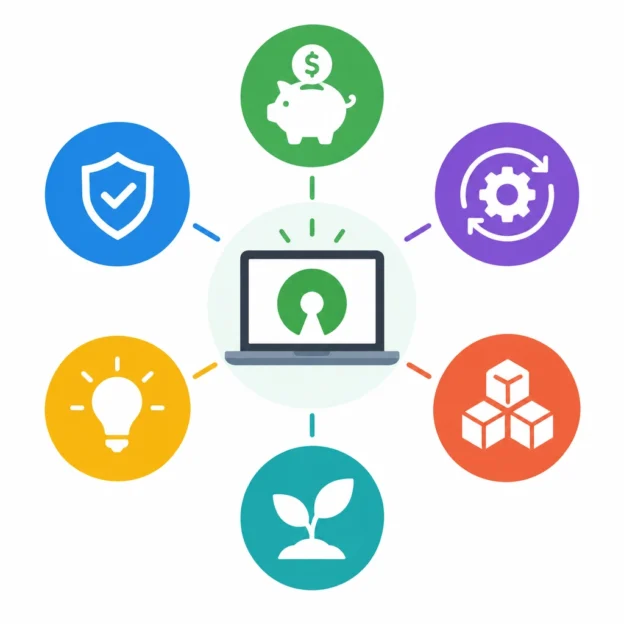

Key Benefits of Choosing Free Software for Your Tech Stack

Key Benefits of Choosing Free Software for Your Tech Stack

Picking software for a business or personal project can feel like a balancing act. You need tools that work well, fit your budget, and won’t create headaches as your needs change. Free software—often called open-source or free and open-source software (FOSS)—can be a smart choice. It gives users access to powerful tools without an upfront license fee, while offering benefits that go well beyond saving money.

Lower costs without sacrificing capability

The most obvious benefit is the price: many free software tools can be downloaded and used without paying a licensing fee. That can make a real difference for startups, nonprofits, independent creators, and small businesses working with limited budgets.

But free doesn’t necessarily mean basic. Tools such as Linux, LibreOffice, WordPress, and PostgreSQL are used for serious work by individuals and organizations of all sizes. Choosing them can free up budget for other priorities, such as hardware, training, support, or product development.

It’s worth remembering that software may still come with costs. You might pay for hosting, setup, customization, or professional support. Even so, avoiding recurring license fees can make the overall cost of a tech stack more manageable.

More control over your tools

Free software often gives users more control over how a product is configured and used. With many open-source tools, the source code is available for inspection and modification. That means developers can adapt a tool to meet specific needs rather than relying entirely on a vendor’s roadmap.

This flexibility can be valuable when a business has a specialized workflow, needs to connect systems in a particular way, or wants to avoid being locked into one provider. If your requirements change, you may be able to adjust the software—or hire someone to do it—instead of switching to a new product altogether.

Of course, customization takes skill and time. The freedom to change a tool is useful only if you have the resources to make those changes responsibly.

Transparency and trust

When software is open to inspection, technical teams can review how it works, check how data is handled, and identify potential issues. That doesn’t automatically make every open-source tool secure or trustworthy, but it can provide more visibility than software whose inner workings are entirely hidden.

Transparency can also help organizations meet compliance or internal review requirements. Teams can assess a project’s code, documentation, release history, and community practices before adopting it. In practice, the quality and maintenance of a project matter just as much as the fact that its code is available.

Strong communities and shared improvement

Many free software projects are supported by communities of developers and users. These communities may create documentation, answer questions, report bugs, and contribute improvements. A healthy community can make it easier to find advice and learn how to use a tool well.

Shared development also means that useful improvements aren’t limited to one company’s priorities. When people contribute fixes and features, the whole user base may benefit. Some projects are maintained by businesses, foundations, or paid teams, while others rely more heavily on volunteers, so it’s important to understand how a project is supported.

Before choosing a tool, look at how often it receives updates, whether known issues are addressed, and how welcoming and informative its community is.

Easier to adapt and move

A tech stack built around open standards and widely used free software can make it easier to move data between systems. It may also offer more choices for hosting, integrations, and service providers.

That flexibility helps reduce vendor lock-in—the situation where leaving a platform becomes difficult because your data, workflows, or essential features depend on one provider. No tool can eliminate switching costs entirely, but using software with accessible data formats and clear export options can give you more room to change direction.

A practical way to choose

Free software isn’t automatically the right choice for every job. Some commercial products provide dedicated support, polished onboarding, or features that would be expensive to recreate. The key is to compare the whole picture: licensing, maintenance, security, usability, support, and the cost of managing the tool over time.

A thoughtful tech stack doesn’t have to be built entirely from free tools. It can combine open-source software with paid services where they offer clear value. By choosing tools that are flexible, well-maintained, and suited to your team, you can keep costs under control without limiting what you’re able to build.

Building a Culture of Innovation with Open Source Initiatives

Building a Culture of Innovation with Open Source Initiatives

In our fast-paced digital world, innovation isn’t just a nice-to-have—it’s a necessity. Companies are constantly seeking ways to leave behind the traditional methods of closed systems and secretive development. Enter open source initiatives, which have become a powerful catalyst for fostering a culture of innovation. But how exactly can companies embrace open source to elevate their creative game and magnetize talent? Let’s dive in!

The Open Source Phenomenon

At its core, open source software is built on the principles of collaboration and transparency. It allows any individual with the right skills to contribute to projects, tweak existing solutions, and share knowledge with others. Think of it as a global co-creation process where ideas can evolve rapidly, driven by community contributions.

Organizations that embrace open source not only leverage external talent but also tap into collective expertise. This collaborative spirit can lead to unexpected innovations—after all, sometimes two (or twenty!) heads are better than one!

Breaking Down Barriers to Entry

One of the most significant advantages of open source initiatives is that they democratize participation. When companies operate under an open source model, team members are invited to contribute ideas and solutions without the usual constraints of hierarchy. This inclusivity empowers employees at all levels to share their insights, fostering a vibrant culture of creativity and experimentation.

Instead of resorting to ‘that’s not my job’ attitudes, you might find your team brainstorming together to solve a particular problem using an open source project or even creating a new tool from scratch that serves their needs. This freedom not only keeps the creative juices flowing but also boosts morale, as everyone feels valued and part of something greater.

Gaining Wider Access to Resources

When organizations embrace open source, they benefit from a wealth of resources that would be difficult to come by on their own. Open source communities are filled with experts who are passionate about their projects and eager to share their knowledge. By tapping into these communities, companies can uncover new technologies, best practices, and methodologies that can be integrated into their own processes.

Imagine your organization is looking to ramp up its machine learning capabilities. By contributing to or adapting existing open source projects, your team can quickly learn from industry leaders, experiment with cutting-edge tools, and ultimately fast-track innovation. The nature of open source means that everyone stands to gain, which translates into quicker turnarounds and more agile teams.

Encouraging Experimentation

In a traditional corporate setting, employees often fear failure. That fear can stifle creativity, leading to fewer innovative ideas being pitched or explored. Open source initiatives, however, inherently celebrate experimentation. When your team works on open source projects, mistakes become a collective learning experience rather than a reason for reprimand.

This trial-and-error approach allows teams to test out new ideas without the fear of significant repercussions. If something doesn’t pan out, it’s not just a failure—it’s data that can be used to improve future attempts. This mindset is invaluable for building a culture where innovation thrives, as employees learn to iterate rather than stagnate.

Fostering Long-term Relationships

Engaging with open source communities can also help your organization establish long-term relationships with contributors, developers, and other businesses. By maintaining a strong presence in these communities, you create pathways for collaboration that extend beyond individual projects. This network can be a goldmine for future collaborations, partnerships, and even talent acquisition.

Often, companies that utilize open source initiatives find themselves in a constant loop of innovation. They evolve and adapt based on trends and community input, meaning they stay ahead of the curve in their respective industries. And who wouldn’t want to be seen as a forward-thinking leader?

The Final Thought

Building a culture of innovation through open source initiatives isn’t just about adopting new tools; it’s about reshaping the way we think about collaboration and contribution. By fostering an environment where experimentation is embraced and diverse ideas are welcomed, organizations can invigorate their teams and ultimately drive greater success. The beauty of open source lies in its ability to unite passionate individuals towards common goals, breaking down silos and forging connections that create real change. So, if you’re looking to ignite innovation within your organization, it might just be time to open the doors to a world that thrives on collaboration and shared creativity.

In the end, remember that every contribution counts—your next big idea might be just one open source project away!

Harnessing the Power of Open Source for Startup Success

Harnessing the Power of Open Source for Startup Success

In the dynamic world of startups, every advantage counts. From funding to market reach, every detail can dictate success or failure. One goldmine that many budding entrepreneurs overlook is open-source software. If you’re running a startup or thinking about launching one, getting acquainted with open source can be a game changer for your business journey. Let’s explore how leveraging open source can supercharge your startup.

Cost-Efficiency Without Compromise

Starting a business usually means operating on a tight budget. The good news? Open-source software is generally free. You won’t have to pour your initial funding into expensive licenses for software that can help you accomplish your goals. Instead, you can redirect those funds towards product development or marketing.

For instance, platforms like WordPress or Magento can be used as frameworks for your website or e-commerce solutions without hefty fees. This kind of savings makes open source particularly appealing for startups where cash flow is king.

Accelerated Development

Time is often your most important resource when launching a new venture. With open source, you have access to a vast library of pre-built tools and projects that can significantly cut down your development time. Instead of building solutions from scratch, you can build upon existing frameworks and applications, accelerating your time-to-market.

Platforms like GitHub host thousands of open-source projects. This not only allows you to find tools suitable for your needs but also helps you connect with a global community of developers who are enthusiastic about collaboration. What’s better than having a dedicated team working on your project, even when they’re not on your payroll?

Community Support

Speaking of community, one of the beauties of open source is the community that surrounds it. When you choose an open-source solution, you’re not just picking software; you’re joining a network of passionate individuals who are often eager to help each other.

If you run into a hurdle while using an open-source tool, chances are you’ll find numerous forums, documentation, and user communities to assist you. Whether it’s troubleshooting an issue or figuring out how to leverage a feature, support is just a search away. That can be a lifesaver when you’re juggling a million other responsibilities in your startup.

Flexibility and Customization

Every startup is different, and your needs can shift rapidly as your business grows. Open-source solutions offer unparalleled flexibility, allowing you to tweak and customize the software to meet your specific requirements. Unlike proprietary software that locks you into its framework, open source gives you the keys to modify the code as you see fit.

For example, if you’re developing an app and you find that a particular feature doesn’t quite align with your business model, you can adapt it or build a new one without waiting for a vendor’s approval or roadmap. This adaptability can be crucial for startups needing to pivot quickly in response to market changes.

Building a Reputation

By embracing open-source methodologies — such as transparency and collaboration — your startup can establish a reputation as an innovative and trustworthy player in your industry. This is especially important in today’s climate, where consumers are increasingly drawn to brands that demonstrate ethical practices.

Moreover, when you contribute back to open-source projects (whether through code, documentation, or community involvement), you’re not just benefitting from the software; you’re also helping to nurture the ecosystem. This kind of engagement can position your startup as a thought leader, attracting talent and potential investors who appreciate your commitment to collaborative progress.

Open Source Isn’t Always Free

While it’s undeniable that open-source software comes with cost savings and many benefits, it’s important to keep in mind that the effectiveness of open-source solutions will ultimately depend on your expertise and resources. While the software is free, the maintenance, customization, and potential hiring of expertise to manage or extend software capabilities can sometimes lead to unexpected costs. Planning ahead is crucial.

The Road Ahead

In the world of startups, innovation is the name of the game, and open source can be a vital tool in your journey toward success. By embracing open-source solutions, you can save money, speed up development, and tap into an invaluable network of support. Not only does it enable agility, but it also fosters a culture of collaboration and innovation that aligns well with the startup spirit.

So whether you’re developing your MVP, planning your next big launch, or looking for ways to optimize your operations, remember that the open-source community is at your fingertips. Harness that power, and you might find that the path to startup success is not only smoother but also more enjoyable!

The Best Free Software Solutions for Small Businesses

The Best Free Software Solutions for Small Businesses

In today’s fast-paced digital world, small businesses are continuously looking for ways to streamline operations, reduce costs, and maximize productivity. One of the best ways to achieve these goals is by leveraging free software solutions. Fortunately, there is a wealth of options available that cater to various aspects of business—from project management and accounting to marketing and communication. Let’s dive into some of the best free software solutions that can empower small businesses without breaking the bank.

Project Management

Trello
Trello is a fantastic tool for managing projects and organizing tasks visually. Its card and board system allows teams to create lists and move cards as tasks progress. Whether you’re managing a marketing campaign, coordinating a product launch, or simply keeping track of deadlines, Trello makes it easy to see where things stand at a glance. With its free version, you get unlimited boards, lists, and cards, making it a stellar choice for small teams.

Asana
If you’re looking for something more structured, Asana is a robust project management tool that helps teams track their work and ensure everyone is on the same page. Its intuitive interface allows for project timelines, to-do lists, and even assigning tasks to team members. The free version is great for small teams, offering a variety of features without overwhelming users.

Communication

Slack
When it comes to team communication, Slack has emerged as the go-to platform for many small businesses. This messaging app allows for real-time communication through channels, direct messages, and integration with various other tools. Slack’s free version is perfect for small teams, featuring search capabilities and voice/video calls—essential for keeping everyone connected and engaged!

Zoom
While not entirely free, Zoom’s free tier offers a fantastic way to hold virtual meetings and webinars without spending a dime. With features like screen sharing and breakout rooms, it’s ideal for remote teams looking to maintain collaboration. Plus, its user-friendly interface means anyone can hop on a meeting with ease.

Accounting and Finance

Wave
Managing finances can be daunting for small business owners, but Wave makes it a breeze. This free accounting software offers robust features, from invoicing to expense tracking—all tailored for small businesses. Wave’s user-friendly dashboard allows you to see your financial health at a glance, helping you make informed decisions without the headache of complex accounting software.

ZipBooks
Another great option is ZipBooks, which offers free accounting software with features such as invoicing, expense tracking, and basic reporting. Its clean design is especially appealing for those who may be new to accounting. Plus, ZipBooks allows for easy integrations with popular apps to ensure seamless operations.

Marketing and Social Media Management

Canva
Creating stunning marketing materials doesn’t have to cost a fortune. Canva is an excellent graphic design tool that allows users to create everything from social media posts to business cards. With a plethora of free templates and intuitive drag-and-drop features, even those without a design background can produce eye-catching visuals that elevate their brand.

Buffer
If you’re looking to create a social media presence, Buffer is a fantastic choice for managing multiple profiles. This platform allows you to schedule posts, analyze performance, and engage with your audience—all from one place. The free version offers limited posting capabilities, but it’s enough to get small businesses started on social media without feeling overwhelmed.

Customer Relationship Management (CRM)

HubSpot CRM
Building and maintaining customer relationships is vital for any business. HubSpot CRM is a robust option for small businesses, offering tools for managing sales pipelines, tracking interactions, and nurturing leads. The free version has plenty of features that make managing customer relationships straightforward, ensuring you never miss an opportunity.

Zoho CRM
Another excellent CRM choice is Zoho, which offers a free tier perfect for small teams. With features that include lead management, contact management, and sales forecasting, Zoho helps businesses streamline their sales process without incurring extra costs.

Final Thoughts

Navigating the array of free software solutions available can feel overwhelming, but the good news is that many of these tools are designed specifically with small businesses in mind. By selectively incorporating these solutions into your daily operations, you can reduce expenses, enhance productivity, and ultimately, drive growth. As you explore these options, consider your team’s specific needs and remember that while some tools may have premium features worth investing in later, the free versions are often more than sufficient to get started. Embrace the digital age and empower your small business with the best tools at your disposal!

Navigating Licensing Models in Open Source Software

Navigating Licensing Models in Open Source Software

Open source software (OSS) has transformed the way we develop and use technology. Its collaborative nature means that anyone can access, modify, and contribute to software projects. But as this space has grown, so has the complexity of licensing. If you’ve ever felt a little lost in the maze of terms and conditions surrounding open source licenses, you’re not alone! Let’s break down this topic in a way that makes sense.

What is an Open Source License?

An open source license is a legal framework that dictates how software can be used, modified, and distributed. These licenses ensure that users have the freedom to interact with the software while also protecting the rights of the original creators. They range widely, offering various levels of freedom and restrictions.

The Freedom Factor

At its core, open source software promotes four main freedoms:

  1. The freedom to run the program for any purpose.
  2. The freedom to study how the program works, and change it to make it do what you wish. (This usually requires access to the source code.)
  3. The freedom to redistribute copies.
  4. The freedom to distribute copies of your modified versions to others. (Again, you’ll typically need the source code for this.)

Some licenses place more emphasis on these freedoms than others. This brings us to two major categories.

Types of Open Source Licenses

Open source licenses are generally divided into two camps: permissive and copyleft. Understanding the difference is key to navigating the world of OSS.

Permissive Licenses

Permissive licenses grant nearly unrestricted freedom to use the software, with very few conditions attached. One of the most popular examples is the MIT License. It allows users to do almost anything with the software—modify it, use it for commercial purposes, or integrate it into proprietary products—as long as the original license is included.

Other common permissive licenses include the Apache License and the BSD License. Developers favor these licenses when they want to maximize the potential for adoption and contribution, allowing their work to be assimilated into other projects without many strings attached.

Copyleft Licenses

Copyleft licenses take a different approach. The most well-known is the GNU General Public License (GPL). While it also allows for modification and redistribution, it requires that any derivative work is also distributed under the same license. This means that if you modify a GPL-licensed program and distribute it, you must also make your changes available under the GPL.

This principle ensures that the software remains free for all users, but it can be a deterrent for companies wanting to keep their modifications private. Because of this, many organizations weigh their options carefully before choosing a copyleft license.

More Choices Beyond the Basics

Beyond permissive and copyleft licenses, there’s an entire universe of open source licenses. Some licenses like the Creative Commons licenses are designed for non-software works like content, while others focus on specific needs, like the Mozilla Public License, which balances the sharing requirements of copyleft with a more permissive approach.

Moreover, familiar open source projects like WordPress or the Linux kernel each have their own unique licensing models. Understanding the specific terms of these licenses is essential when you’re considering contributing or building on these projects.

Practical Considerations

When navigating licensing, consider a few practical points:

  • Compatibility: If you’re using several libraries in a project, ensure they can coexist. Some licenses are not compatible with others, which can lead to legal complications.

  • Commercial Intentions: If you plan to use OSS in a commercial product, you’ll want to be especially mindful of the license. A copyleft license might push you into disclosing your source code, which could threaten your proprietary edge.

  • Documentation and Compliance: Familiarize yourself with the documentation provided alongside the licenses. Many projects will provide clear guidance about how to comply with their specific licensing terms.

Finding Your Way

Navigating open source licensing doesn’t have to feel like walking through a legal jungle. By understanding the basic types of licenses and what they allow, you can better determine the right software for your needs—whether for personal projects, educational purposes, or commercial ventures.

As open source technology continues to evolve, staying informed about new licenses and their implications will be key. In this vibrant landscape of innovation and collaboration, embracing the spirit of open source not only enhances your projects but also fosters a community built on shared knowledge and respect for creators. Happy coding!

The Role of Open Source in Fostering Innovation

The Role of Open Source in Fostering Innovation

In today’s fast-paced digital landscape, innovation is the name of the game. From groundbreaking apps that change how we interact with the world to revolutionary new platforms that flip industries on their heads, the need for innovation has never been greater. Amidst all this excitement, one concept stands out as a formidable catalyst for change: open source.

So, what exactly is open source? At its core, open source refers to software whose source code is made available to the public. This allows anyone to view, modify, and distribute the code without restrictions. Think of it as a community-driven recipe book—users can share their tweaks, suggestions, and variations to create something better together. And although open source software like Linux, Apache, and WordPress is often at the forefront, the open-source movement extends far beyond code to ideas, designs, and even community initiatives.

Breaking Down Barriers

One of the most profound impacts of open source is its ability to break down barriers. Traditionally, accessing advanced technology or development frameworks could be both expensive and exclusive, leaving many talented individuals and startups sidelined. Open source flips this narrative on its head, providing anyone with an internet connection the tools they need to create, experiment, and innovate.

Consider this scenario: a developer in a small town with limited resources can access open-source software to build a cutting-edge application. Thanks to communities like GitHub, they can collaborate with experienced developers worldwide, learning and growing along the way. This newfound accessibility empowers individuals from diverse backgrounds to participate in technology creation, nurturing a richer pool of ideas and solutions.

Community Collaboration

Collaboration is at the heart of the open-source ethos. Instead of working in silos, developers and innovators band together to accelerate progress. Through platforms like GitHub, contributions come pouring in from different corners of the world—each bringing unique perspectives, solutions, and ways of thinking.

This collaborative approach has birthed numerous groundbreaking projects. Take, for instance, the development of the Mozilla Firefox browser. Originally a small, community-driven project, it evolved into one of the world’s most popular web browsers due to the synergy between contributors and the dedicated community behind it. This spirit of teamwork allows for rapid prototyping and iteration, enabling innovators to test ideas quickly and effectively.

Driving Economic Growth

Open source is not just about innovation in technology; it also plays a crucial role in driving economic growth. By minimizing costs, open source allows startups and small businesses to innovate without the same financial burden they would face if reliant on proprietary software. We’ve seen how companies like Red Hat have thrived by providing support and services around open-source software—creating jobs and generating revenue while fostering a culture of innovation.

Additionally, open source ecosystems can attract investment. Investors are increasingly focusing on companies that leverage open-source tools for product development, recognizing that these companies can be more agile, cost-effective, and adaptable in an ever-changing market.

Encouraging Experimentation

When innovation thrives, it often comes from experimentation and risk-taking. Open source naturally cultivates this environment, encouraging developers to tinker and play without the fear of hefty licensing fees or legal ramifications. A developer can modify an open-source project freely, test out new features, and even create something entirely new on top of existing frameworks. This ‘sandbox’ mentality leads to vibrant experimentation, which often yields unexpected and revolutionary results.

A Foundation for the Future

As we look ahead to a world increasingly defined by technology, the role of open source becomes even more significant. It serves as a foundation that not only supports current innovations but also nurtures the next generation of thinkers, dreamers, and doers. The ability to share knowledge, tools, and resources will continue to shape industries and communities alike.

In the end, the spirit of open source embodies the belief that collaboration breeds innovation. By championing transparency, breaking down barriers, and fostering inclusive communities, open source cultivates an environment where groundbreaking ideas can flourish. As we move forward into uncharted territory ripe for exploration, it’s clear that open source isn’t just a method of developing software; it’s a powerful engine of innovation that holds the potential to change the world for the better. The more we embrace its principles, the more we pave the way for a creative and collaborative future that benefits us all.

How to Get Started with Open Source Software Development

How to Get Started with Open Source Software Development

If you’ve decided to dive into the world of software development, you might be curious about open source. Perhaps you’ve heard the term tossed around at meetups, or maybe you’ve browsed through repositories on GitHub and wondered how to get involved. Fear not! Whether you’re a seasoned programmer or just beginning your coding journey, getting started with open source can be both fulfilling and fun. Let’s explore the steps to help you join this vibrant and collaborative community.

Understanding Open Source

First off, let’s break down what open source software actually is. Open source refers to software that’s made available to the public for free, allowing anyone to view, modify, and distribute the code. The idea behind it is about sharing knowledge and collaboration. This means that instead of working in isolation, developers can come together to improve software, fix bugs, or even create something entirely new!

Finding Your Passion

Before you jump in, take a moment to think about what interests you. Open source projects cover a vast range of topics—everything from web development to artificial intelligence. Explore projects that align with your interests or skills. A good place to start is GitHub, where many open source projects are hosted. You can search by topics, tags, or even browse trending repositories. Alternatively, sites like GitLab and Bitbucket also host open source projects.

Take a little time to play with different projects. If you’re passionate about a specific domain—say, health tech or education software—look for projects in that area. Choose something that excites you; your enthusiasm will make it easier to navigate the challenges that come with coding!

Getting Set Up

Once you’ve found a project that sparks your interest, it’s time to get your development environment ready. Here are a few steps to ensure you’re set up for success:

  1. Install Git: Version control is a crucial part of software development. Git allows you to track changes to your code, collaborate with others, and roll back versions if needed. Download and install Git.

  2. Set Up a GitHub Account: If you haven’t already, sign up for a GitHub account. Familiarize yourself with the platform; many open-source projects are hosted here, and it’s where you’ll contribute your changes.

  3. Learn Git Basics: Understanding basic Git commands like clone, commit, and push will empower you to collaborate effectively. There are plenty of resources online to help you get acquainted with Git.

  4. Install Necessary Software: Depending on the project, you may need specific programming languages or frameworks installed on your machine. The project’s documentation will often include required tech stacks.

Making Your First Contribution

With everything set up, you can finally dive into contributing. Here’s how to get rolling:

  1. Read the Documentation: Every well-maintained project should have some documentation. Look for a README.md file in the repository. Also, check if there’s a CONTRIBUTING.md file that outlines how to contribute.

  2. Look for Issues: Many projects maintain an issue tracker, where you can find bugs to fix or features to implement. Look for “good first issue” or “help wanted” tags—these are often simpler tasks that are ideal for newcomers.

  3. Fork the Repository: Using GitHub, fork the repository to create your own copy. This allows you to make changes without affecting the original codebase.

  4. Make your Changes: Now it’s showtime! Open the project in your code editor, make your changes, and then push those changes back to your GitHub repository.

  5. Create a Pull Request: Once your changes are ready, it’s time to propose your modifications to the main repository. A pull request allows the project maintainers to review your changes. Be courteous in your comments, explaining what you’ve done and why.

Engage with the Community

Open source isn’t just about code; it’s about people. Engage with the community around the project. Join discussions on issues, ask questions, or even contribute to project chats or forums. Other contributors can offer invaluable guidance, and building relationships can lead to more exciting opportunities within the community.

Keep Learning and Growing

As you become comfortable with your first contributions, continue to challenge yourself. Explore more complex issues or even start your own open source project! Don’t hesitate to seek out additional resources like tutorials, forums, or podcasts centered around open source development.

Starting your journey in open source development is not just about improving your coding skills— it’s about becoming part of a global community dedicated to collaboration and mutual growth. So dive in, challenge yourself, and enjoy every step of the way. Your contributions, no matter how small, can make a big impact! Happy coding!

Demystifying Software Freedom: What It Means for Users

Demystifying Software Freedom: What It Means for Users

In the vast landscape of technology, terms like “software freedom” can often sound like jargon reserved for developers and tech enthusiasts. But fear not! We’re here to break it down into relatable bites and help you understand why this concept matters, especially to you as a user.

So, what exactly does “software freedom” mean? At its core, it refers to the idea that software should be free—not just in the monetary sense, but in terms of the freedoms it grants users. These freedoms typically fall into four main categories:

  1. The freedom to run the software for any purpose: This means you can use the software however you see fit, whether it’s for personal projects, business use, or even tinkering just for fun!

  2. The freedom to study how the program works, and change it to make it do what you wish: With access to the source code—essentially the building blocks of programs—you can see what’s happening behind the scenes. Not only that, but you can also adapt it to your specific needs.

  3. The freedom to redistribute copies: If you find that a particular piece of software is super helpful, you can share it with friends, family, or colleagues, empowering others to benefit from it too.

  4. The freedom to distribute modified versions: If you take that software and improve it, you can share your modified version with the world, promoting a culture of collaboration and learning.

Now, you might be wondering, “Why should I care about these freedoms?” Well, let’s dig a little deeper.

The Power of Choice

One of the biggest advantages of software freedom is the empowerment it provides. When you use proprietary software—like that shiny app you downloaded from the app store—you’re often stuck with what the developer wants you to have. This can feel limiting, especially if there’s a bug or a feature you wish were different.

On the other hand, with free software, you have choices. If you encounter an issue, you can troubleshoot it yourself or ask the community for help. Plus, you can switch to an alternative product if the one you’re using doesn’t serve your needs or if it starts doing things you don’t agree with (like intrusive advertising or data mining). Being able to choose your tools means you have a sense of autonomy in your tech-savvy life.

Community and Collaboration

Another important aspect of software freedom is the community that often surrounds it. Take, for example, the world of open-source projects. When you have thousands of contributors from different backgrounds all working together on a single project, the opportunities for collaboration blossom. You’re not just a passive user; you can engage with others, learn new skills, and even contribute your own insights.

This community approach also means that software tends to improve over time at a rapid pace. Bugs are identified and fixed quickly, and new features often emerge from user-driven suggestions rather than a corporate agenda. In a way, it’s a testament to the incredible things that people can achieve when they work together.

Privacy and Control

In an era where concerns about online privacy are more pronounced than ever, software freedom can be a game-changer. Many proprietary software solutions are notorious for tracking user behavior, selling personal data, and lacking transparency in how they operate. With free and open-source software (FOSS), you have the ability to inspect the code and determine what’s truly going on.

Imagine being able to use software without the fear of it quietly siphoning off your personal information. Many free software projects are founded with respect for user privacy at their core. This means better control over your data and a stronger sense of trust in the tools you rely upon daily.

Thriving Through Knowledge

Using free software is not just about immediate benefits; it’s also a powerful way to become more knowledgeable and hands-on with technology. For instance, if you constantly rely on proprietary applications, you might not have the motivation or opportunity to learn about how software works. However, by using software that grants you access to its source code, you’re encouraging yourself to learn, experiment, and grow as a user.

Moreover, following the journey of a project—watching it evolve, collaborating with others, and even attending community events—can be incredibly enriching. You become a part of a living ecosystem rather than just a mere cog in the machine.

In a nutshell, software freedom is more than just a set of technical guidelines—it’s about fostering a culture of empowerment, collaboration, and respect for privacy. When you explore software that embodies these principles, you not only enhance your own tech experience but also contribute to a larger movement aimed at making technology more inclusive and accountable. So the next time you download an app or install a program, consider whether you’re choosing freedom or simply settling for convenience. Your tech experience might just depend on that choice!

Exploring the Advantages of Using Open Source Business Software

Exploring the Advantages of Using Open Source Business Software

In today’s fast-paced digital world, businesses are continually seeking ways to improve efficiency, cut costs, and foster innovation. One avenue gaining traction is the adoption of open source business software. You might have heard the buzz about “open source” but may not know just how beneficial it can be for your business. Let’s dive into some of the top advantages that make open source software an appealing option, regardless of your company’s size or sector.

Cost-Effective Solutions

Let’s face it: running a business is expensive. From payroll to marketing, every penny counts. One of the most compelling benefits of open source software is its affordability. Traditional software often comes with hefty licensing fees, ongoing update costs, and sometimes even management fees. Open source solutions, on the other hand, are typically available for free or at a significantly lower cost. This makes them an attractive option, especially for startups and small to medium-sized enterprises (SMEs) looking to maximize their budgets without skimping on essential tools.

Flexibility and Customization

Every business is unique, and what works for one may not suit another. Open source software offers unparalleled flexibility. Because its source code is accessible, businesses can tailor the software to fit their specific needs, whether that’s modifying features, adding new integrations, or enhancing security. If you have an in-house tech team, they can create a version that perfectly aligns with your workflow. If not, there is often a vibrant community of developers ready to lend a hand. This level of customization simply isn’t possible with closed-source alternatives where you’re stuck with pre-defined features.

Community Support and Innovation

One of the often-overlooked advantages of open source software is the robust community that often surrounds it. Developers, users, and businesses contribute to the software, sharing their knowledge and expertise. This creates a wealth of resources like forums, online tutorials, and extensive documentation. Not only does this make it easier to troubleshoot issues, but active communities also drive continuous innovation.

Using open-source software means you’re often at the forefront of developments. Updates and new features emerge rapidly, driven by the collective input of users who genuinely want to improve the product. This results in software that not only keeps pace with industry trends but often leads them.

Enhanced Security

In an age where data breaches and cyber threats are an everyday concern, security is top of mind for most businesses. Open source software may seem counterintuitive when it comes to security. After all, if the code is available to everyone, doesn’t that make it easier for hackers? The reality is quite the opposite.

With so many eyes on the code, security vulnerabilities tend to be identified and patched faster. The same cannot be said for proprietary software. Here, users often have to wait for the vendor to release fixes, which can be slow and inefficient. Additionally, the community of developers who contribute to open source software are often highly skilled professionals who continuously work to keep the software secure.

Avoiding Vendor Lock-In

Vendor lock-in occurs when a customer is dependent on a particular service provider due to the proprietary nature of the software or the high costs associated with switching products. With open source software, you retain full control over your data and infrastructure. You’re not at the mercy of a vendor’s pricing or changes to their services. This independence means businesses can switch providers or modify their systems without facing debilitating barriers.

Building a Sustainable Business Model

Investing in open source software can also foster a mindset of collaboration and community within your team. When your team understands the software they’re using, they are more likely to contribute to its development, leading to a culture of continuous improvement and innovation. This environment encourages employees to take ownership and leverage the tool to its fullest potential, fostering creativity and productivity.

Wrapping It Up

Using open source business software truly opens doors for businesses of all sizes. From significant cost savings and enhanced security to flexibility and the collective wisdom of strong communities, the benefits are compelling. As technology continues to evolve, keeping your options open—with an eye toward the future—can empower your business to thrive in an increasingly competitive landscape. Whether you’re just starting out or looking to revamp your current solution, considering open source software might just be the step forward you need. Who knows? It could lead you to discover innovative solutions that boost your business to new heights!